Why I Build My Star Wars Droids with PETG Instead of PLA
Parts Needed
Why I Build My Star Wars Droids with PETG Instead of PLA
If you’ve spent any time in the droid building community, you’ve probably noticed that everyone has an opinion on filament. This isn’t one of those “PLA is terrible” articles.
PLA is a great material. It’s easy to print, inexpensive, and it’s what most people start with for good reason.
I just don’t use it for my full-size droids.
I’ve built a life-size B1 Battle Droid, Pit Droid, and K-2SO almost entirely in PETG, and after thousands of hours of printing, assembling, sanding, painting, and repairing those builds, PETG has earned my trust.
Building a Full-Size Droid Is Different
A Benchy doesn’t have to survive much.
A six-foot-tall droid does.
Long before your droid is standing in the corner looking awesome, every part is going to be handled dozens of times. You’ll test fit it, pull it apart, sand it, fill seams, prime it, paint it, install hardware, take it apart again because something didn’t line up, then do it all over.
That’s a lot of abuse.
I want a material that’s going to survive that process.
PETG Is Tougher
This is probably the biggest reason I use PETG.
PLA is stiff, which is great, but it’s also brittle. If you’ve ever snapped a thin PLA bracket while tightening a screw, you know exactly what I’m talking about.
PETG has a little bit of flex.
That flexibility means parts are much more forgiving when you’re assembling a large prop. Instead of suddenly cracking, they’ll often flex just enough to survive.
When you’ve already spent twenty hours printing a body panel, that’s a pretty big deal.
Heat Matters More Than You Think
Life-size droids don’t always live in a perfectly climate-controlled room.
Mine have spent time in my garage, in the back of my truck, and outside while I was working on them. Those aren’t extreme conditions, but they’re enough to make heat resistance something I think about.
PLA starts getting uncomfortable in temperatures that aren’t all that extreme. A hot car or a few hours sitting in the summer sun can be enough to soften it.
Could you get away with PLA?
Probably.
Do I want to gamble hundreds of hours of work on “probably?”
Not really.
PETG gives me a lot more confidence.
Printing Is the Easy Part
When people compare PLA and PETG, they usually talk about how they print.
Honestly…
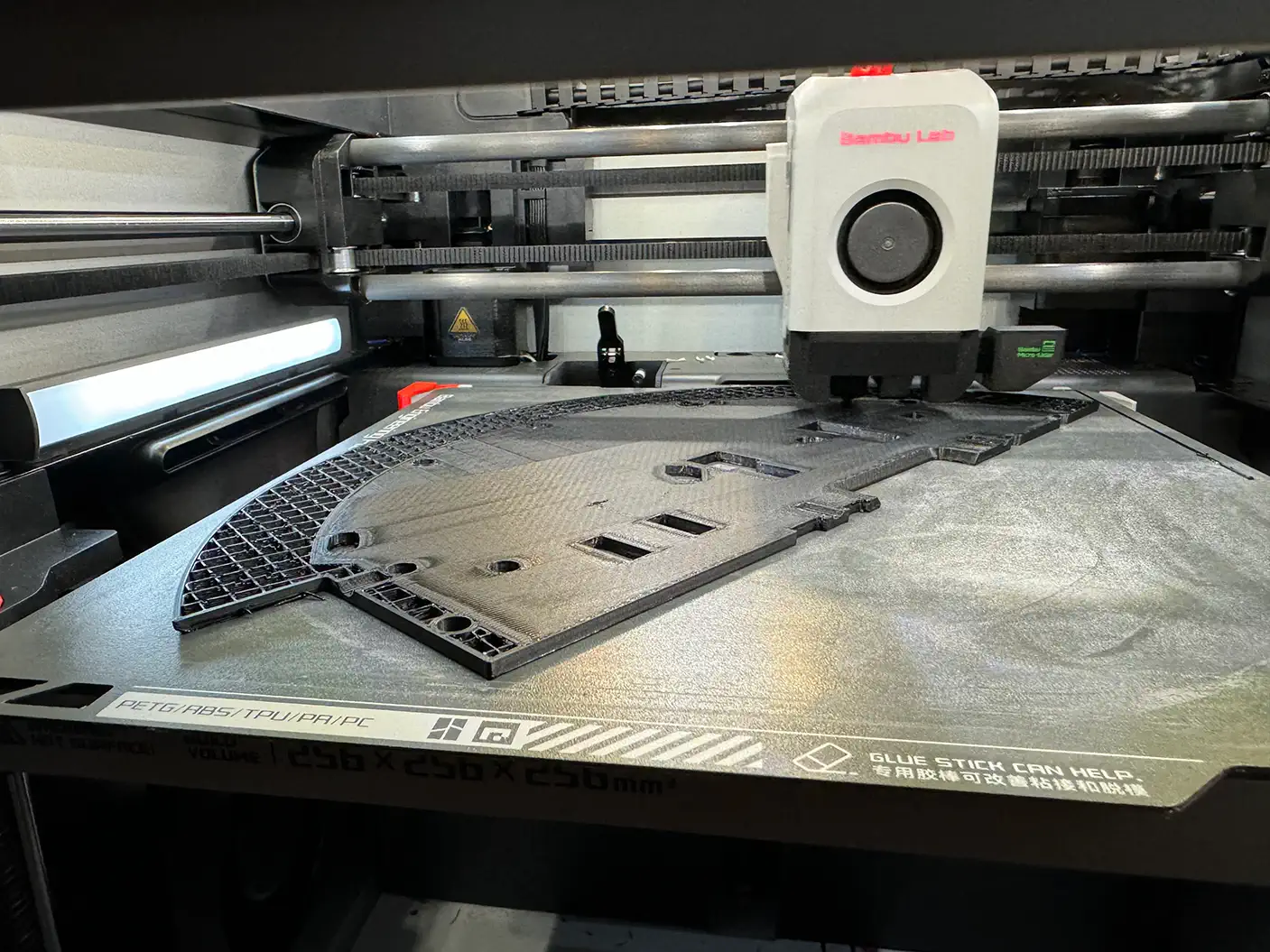
Printing is the shortest part of building a droid.
The real work starts after the printer finishes.
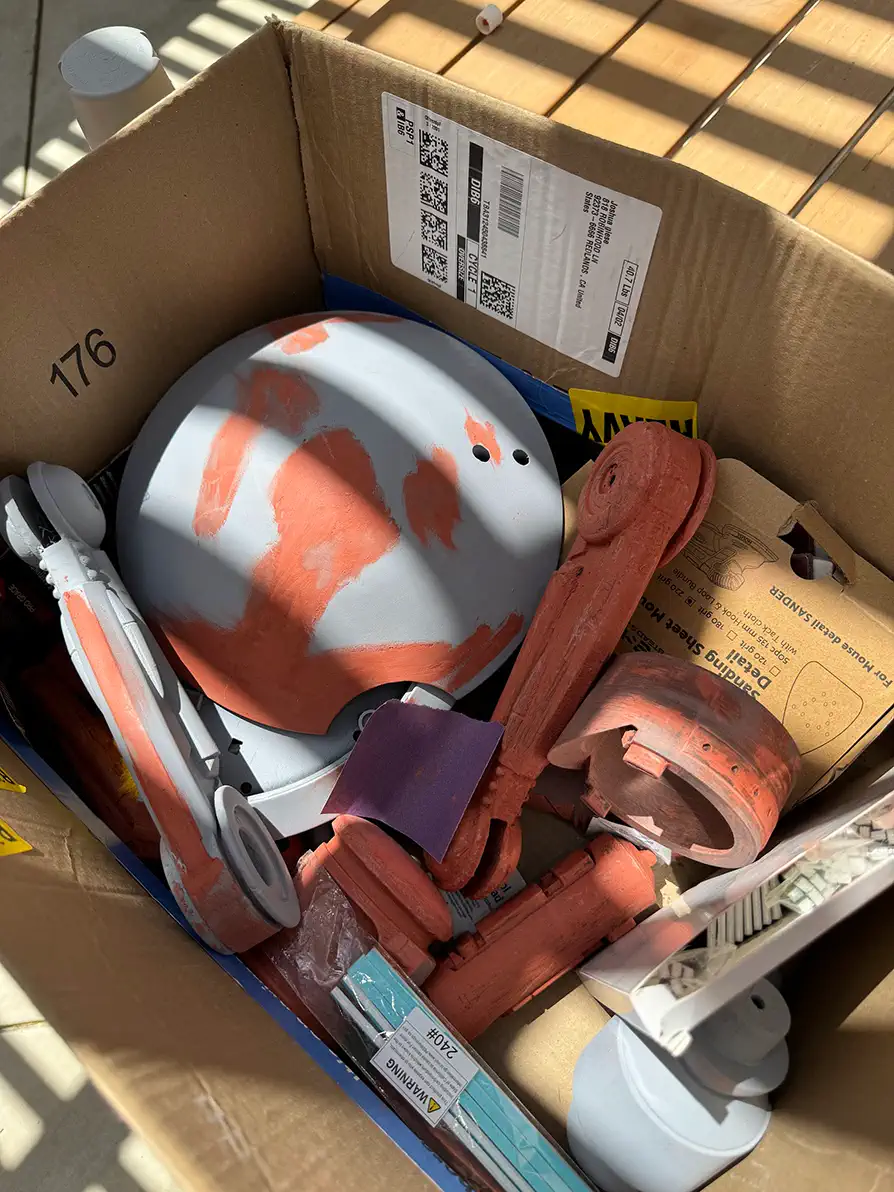
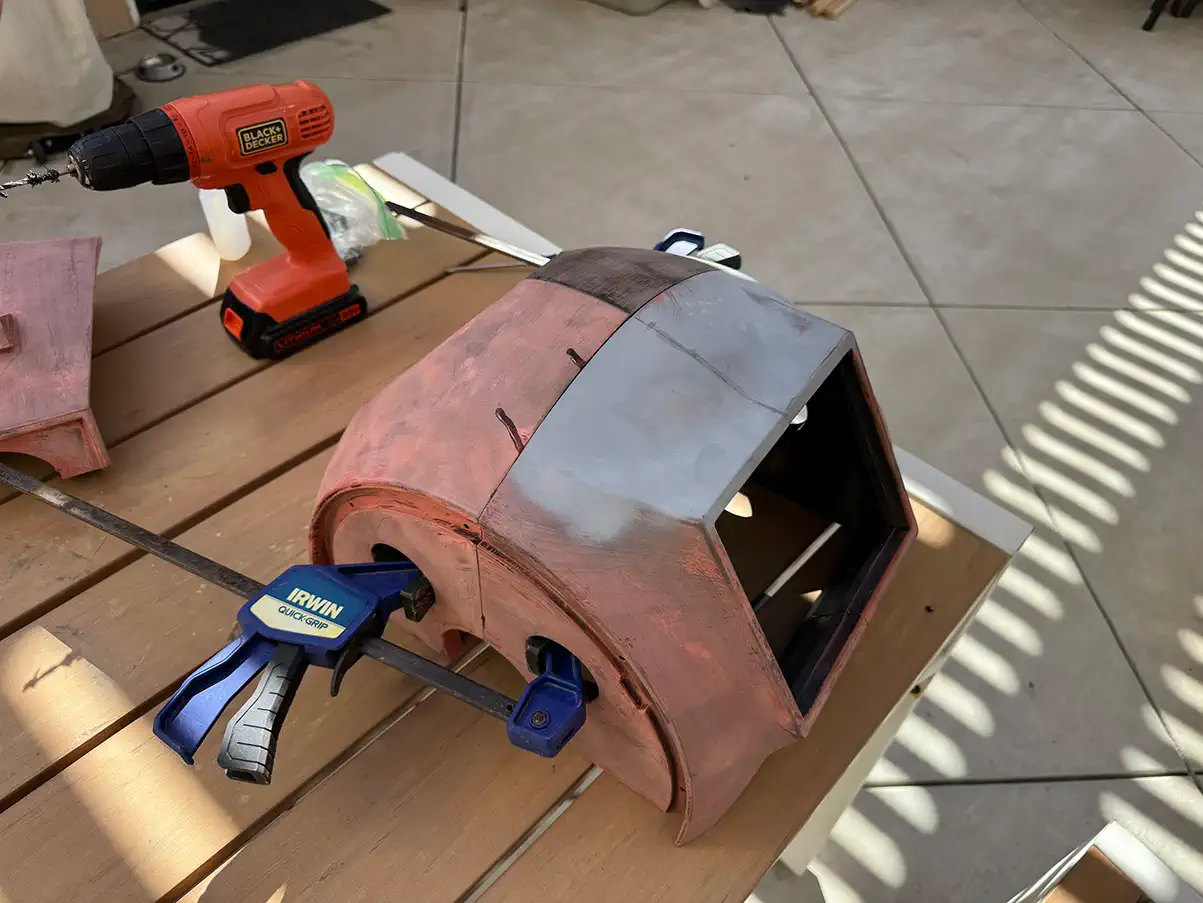
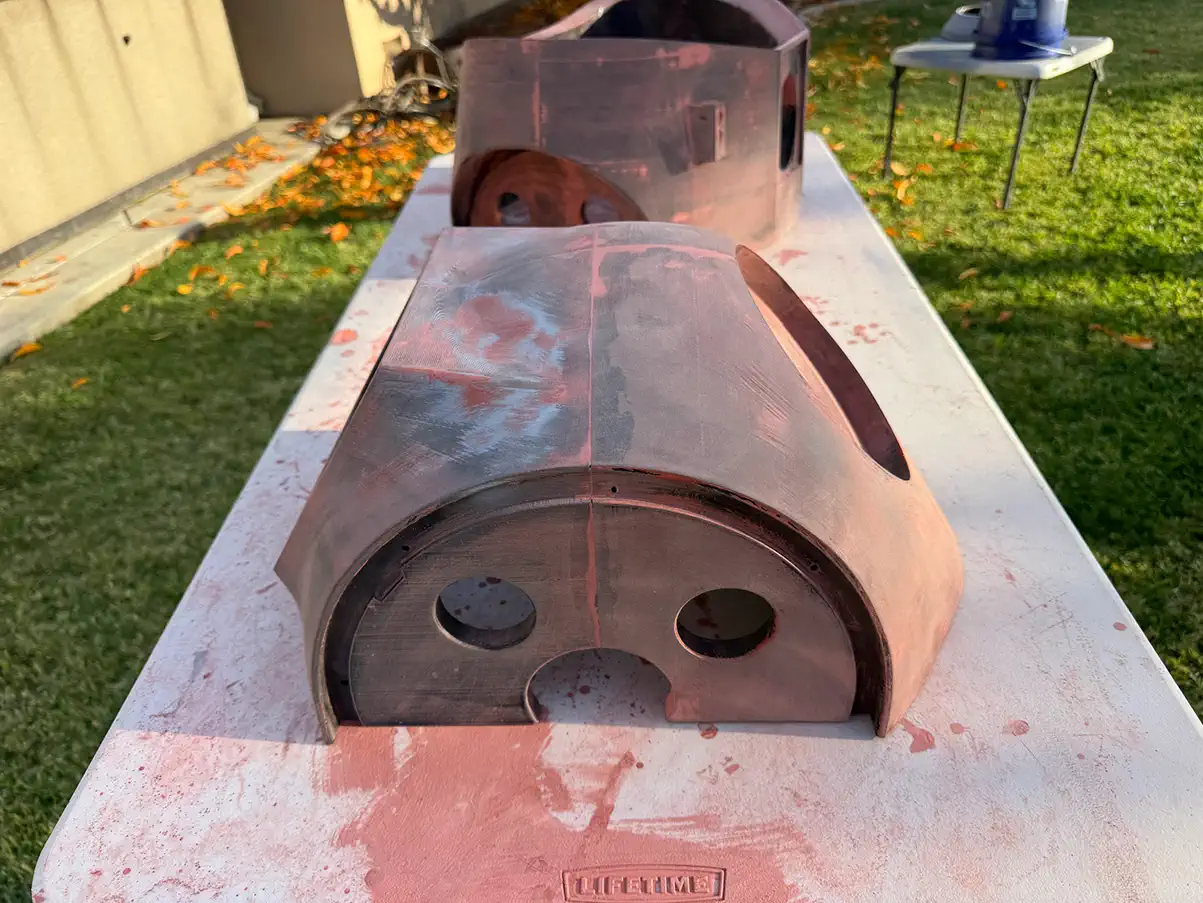
Every piece gets sanded. Filled. Primed. Sanded again. Painted. Weathered. Test fit. Modified. Usually more than once.
That’s where PETG shines for me.
Yes, it can be a little gummier to sand than PLA. You need a bit more patience.
But I’ve found it holds up better through the entire finishing process. I don’t worry nearly as much about chipped edges or cracked parts while I’m working on them.
Assembly Is Where Material Choice Shows
Large droids have screws, magnets, pins, threaded inserts, brackets, and all kinds of hardware hidden inside them.
Every one of those creates stress on the printed part.
With PLA, I always found myself being careful.
- Don’t tighten that screw too much.
- Don’t flex that tab.
- Don’t force that joint.
With PETG, I simply worry less.
It gives me a little more room for mistakes, and that’s something I appreciate on a project that can take months to finish.
I don’t build shelf queens. I build droids that get picked up, worked on, repaired, and occasionally bumped into. I’d rather have a part flex a little than hear it crack.
I Still Use PLA
This isn’t a crusade against PLA.
If I’m printing:
- A prototype
- A test fit
- A jig
- A fixture
- Or a small decorative part
I’ll happily use PLA.
It’s cheaper, prints beautifully, and is often the right choice.
But once it’s time to print the final parts that are actually going on the droid, I’m reaching for PETG.
What PETG Do I Use?
I don’t have a magic filament.
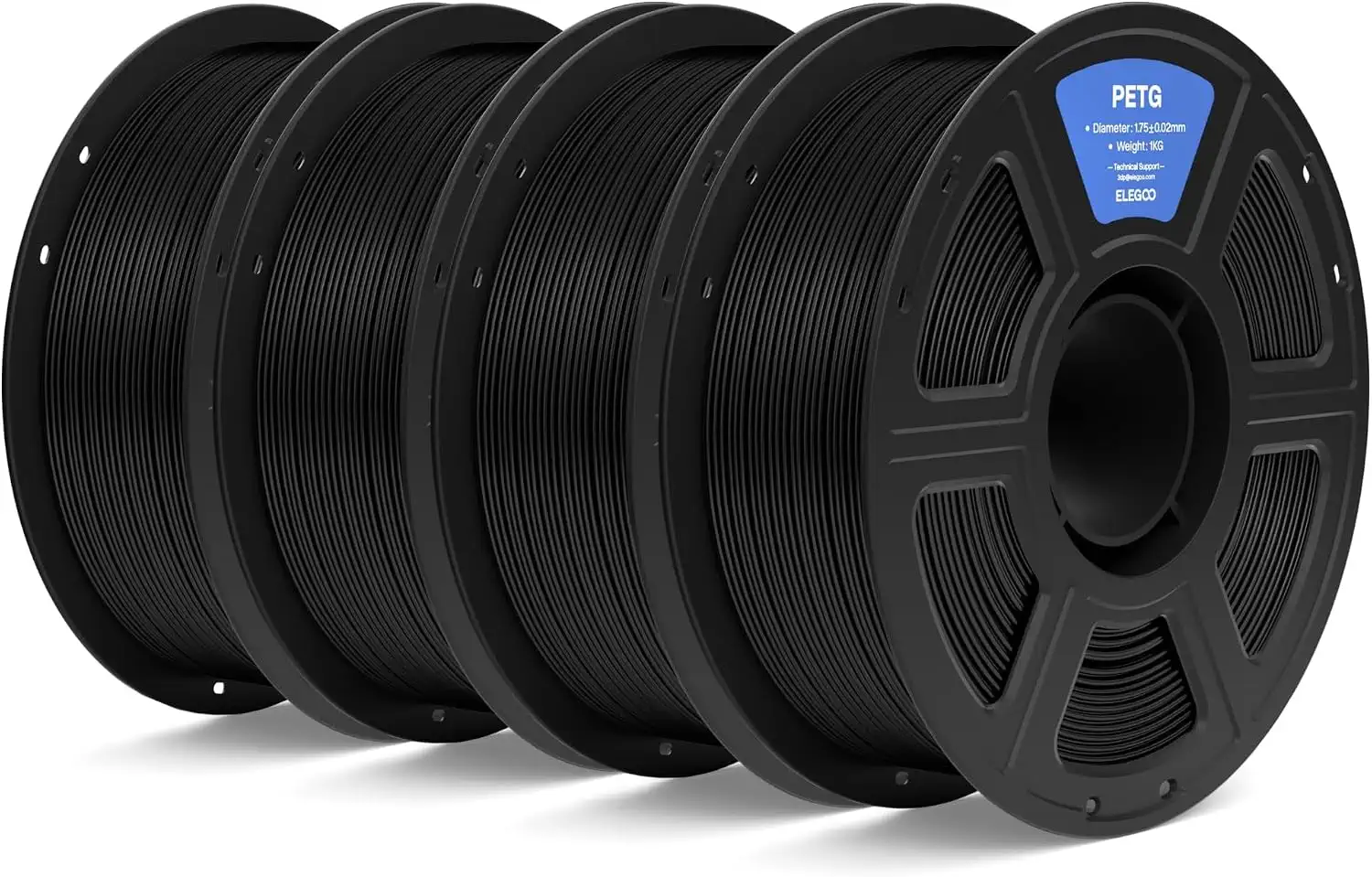
I’ve had great luck with ELEGOO PETG, but honestly I buy whatever reputable brand happens to be on sale.
A full-size droid can easily consume dozens of spools of filament. Saving a few dollars per spool adds up quickly.
As long as it prints consistently and has good layer adhesion, I’m happy.
Final Thoughts
For me, the decision comes down to one simple idea.
I’m not printing parts.
I’m building droids.
Printing is just one step in a much longer process.
The material has to survive sanding, body work, paint, assembly, repairs, moving it around the shop, loading it into the truck, and years of sitting on display.
After building multiple full-size droids, PETG is the material I trust.
Your experience may be different, and if PLA has worked well for your builds, keep using it.
But if you’re starting your first life-size droid and wondering what I’d recommend, I’d tell you to learn PETG.
I think your future self will thank you.
Photos